The Executive Suite
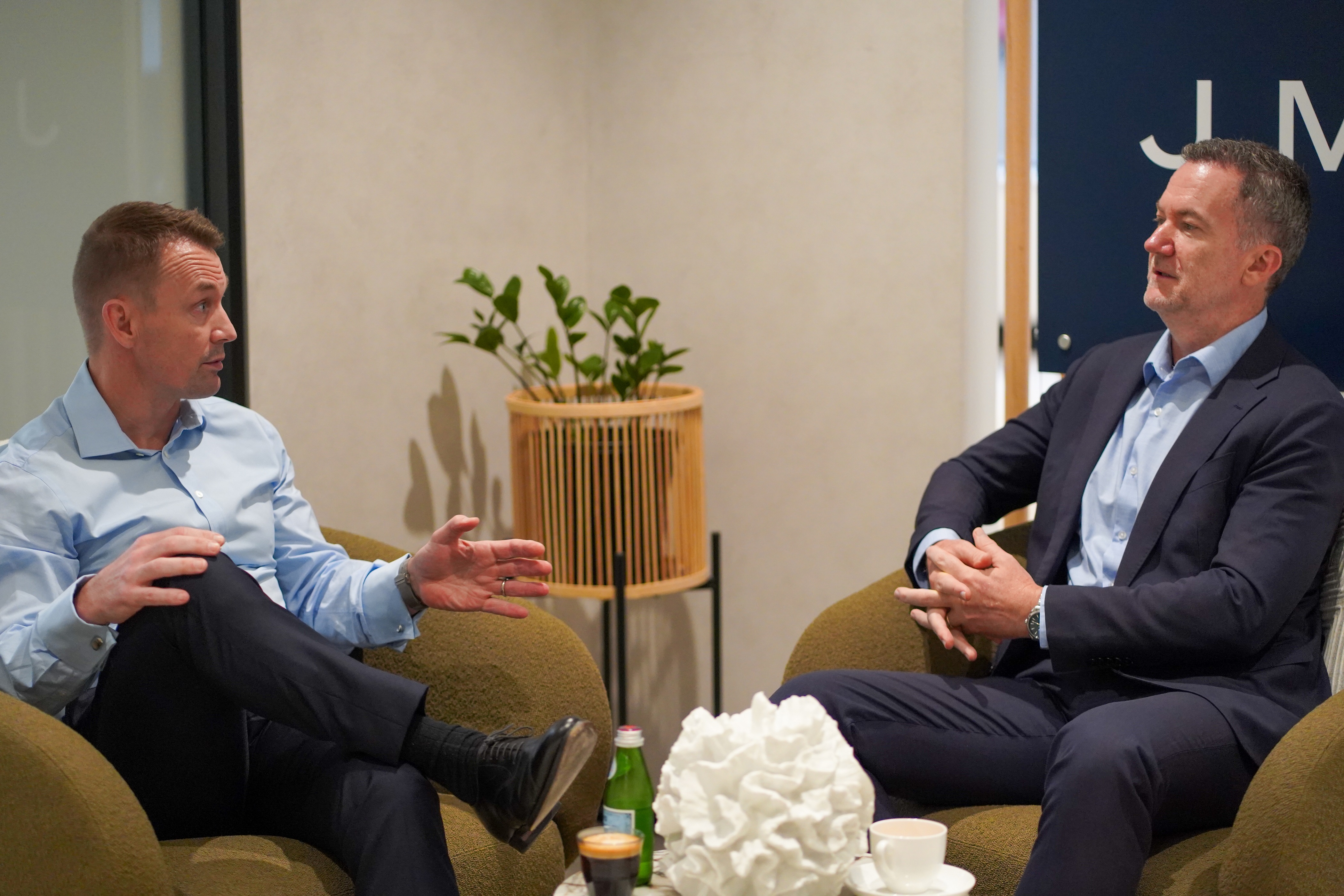
Who is Chris Durack? Adam Taylor-Campbell sat down with Chris to find out what he's learned from leadership.


The Executive Suite
Who is Chris Durack? Adam Taylor-Campbell sat down with Chris to find out what he's learned from leadership.
Sydney, I think, is the place that feels most like home now. It’s where my wife and I had our four kids, where I spent much of my working life, and where we’ve got quite deep roots.
Having said that, Hong Kong felt very much like home while we were there. All four kids were at school there. We had a very busy family life going on, and part of a great community, which is what makes a place feel like home to me. I grew up in Melbourne, started work in Canberra and lived in Singapore as well. I love all those places and there’s a piece of home in each of them, really.
Probably sailing. I started about twenty years ago on Sydney Harbour, and I’ve been lucky enough to do a bit in Europe, most recently in the Greek Islands. It’s a fantastic way to see a place. I also enjoy being the skipper. You’ve got to trust your own judgement and rely on the people around you. And you get to know your friends pretty well when you’re all living on a boat together.
The other one is tennis. I’ve played since I was a kid, and my son and I recently won a competition together in Marrickville. At 54, that felt a little like passing the baton. He might end up doing better than me. I’m still playing, though.
I’ve just finished George Megalogenis’s Three Shocks. He writes about how Australia has changed and how that’s played out in our politics. Growing up in Melbourne, I’d seen some of those changes first-hand. It was interesting to go back and think about what was actually driving them.
The other thing I’m continuing to learn about is teaching. I teach postgraduates at Sydney Uni, and listening to the international students has made me think quite hard about what they need from the course. I’m curious about where AI can help with that and have been experimenting a bit this semester in its use as part of the course. How can I play a part in helping prepare students not just with the content they need to understand markets but also to engage with AI in a way that’s practical and prepares them for what’s ahead?
I looked after ten markets across Asia Pacific, and one thing you learn fairly quickly is that the way you lead in one place may land quite differently somewhere else. You’ve got to spend time with people before you can work out how best to lead them.
For me, that meant getting on a plane when I could. Sit down with the local team, spend time with clients, and hear directly what matters to them. And give them a chance to get to know you, too. I think that’s a big part of how you earn trust.
Professionally, it was probably leaving the CEO role at State Super to join Schroders. I was going from running an organisation into a much bigger one. I could see what Schroders was doing in asset allocation and portfolio design, and how useful that could be to clients. I wanted to be part of it. Looking back, it opened up a great deal for me.
The move to Hong Kong felt risky in a different way because it was a decision for the whole family. My wife and I had four kids who were still finding their feet. We knew it would be disruptive. We also felt that living somewhere quite different would give them a chance to grow, and we were prepared to take that chance.
I think it starts with listening. The really good leaders I’ve seen listen closely enough that they might actually change their mind. They can take in quite different views and work out what to do with them.
Then they’ve got to be able to say, in fairly simple terms, where we’re going, why it matters and what people can do to help. Doing both well is rarer than you might think. A good test is what happens after the meeting. Can people go back to their teams and explain, in their own words, what matters and what they’re going to do next?
The global financial crisis brought home to me how personally people feel that sort of pressure. You’ve got to acknowledge what they’re dealing with and help them manage it. And people will take some of their cues from you. If you can stay calm, be honest about what’s difficult and give people something concrete to focus on, that helps.
The other thing I learned is to ask what we could do now that might leave us in better shape when the crisis passed. It’s quite hard to think that way when everyone’s under pressure, which is precisely when it’s worth asking.
I’d start with a fairly basic question. Why would someone want to work here? Of course being paid fairly matters. But people also want to understand what the place values and where their own work fits into that.
I think leaders have to explain what those values mean to them personally, in their own words. Then people see whether they mean it in the decisions they make and the way they deal with people day to day. Those are the things people remember.
I think they’re right to ask to be judged on what they deliver. Before COVID, being seen at your desk, you know, the sheer number of hours you put in, counted for quite a lot. COVID made us think harder about what we were actually using as evidence of commitment.
I also think younger people are more willing to say what they want from work and what matters to them. That can make for a better conversation on both sides. If there’s a good fit, you can do some great work together. And if there’s some doubt about it, you can talk about that early.
I’d probably say the active-versus-passive debate gets more attention than it deserves. It can be a bit reductive I think. If you buy an index fund, you’ve made a decision about what you want to own and why you want it in the portfolio. I’d start with what the client is trying to achieve. Then you can think about which investment strategies are going to address the need. I think to have a dogmatic view about public and private markets, or active and passive is missing the point a bit. They are all tools and techniques to get to an outcome.
I find that lecturing in financial economics, I teach these well known and important theories to students. Things like efficient markets, how options are priced and used to arbitrage, and how different asset classes may or may not diversify a portfolio. And then I spend as much time discussing how in practice you need to adapt all these frameworks for the complexities of real life. I mean you can look at the beach from the shore but you also need to swim in the water. I may be biased but I think there should be more practitioners working in academia!
AI obviously gets plenty of attention, as it should. Clearly, there is a lot of debate from an investment standpoint especially around the valuations of the big tech companies and also about the broader exposures and consequences for the wider market. I suspect where some of the bigger changes for the industry will be is deciding how much of what we collectively do will be replaced versus enhanced by AI development. This is really only getting started. And you can already see the effects in the economic aggregates. When I think about how often I interact with AI models and agents now compared to only a year ago, like many if not most others, the way I work has already been transformed. In another twelve months, I expect this will be completely different again.
The thing about failure is that as much as it can be painful, it’s also essential. I remember working with one of our investment teams who were going through a protracted period of underperformance. Yes, their investment style was out of favour but it was more than that. Confidence, conviction, shared purpose, trust and communication were all impacted. What helped was really listening to honest feedback, including from long standing clients which felt risky. I’m happy to say that going through a painful process in that case resulted in a whole lot of renewal. I’ve also seen up close, the impact on entire organisations dealing with really difficult conditions that threaten their survival. Using the trust you’ve built as a leader and being really tenacious makes all the difference.
I’ve had lots of personal failure. The pitches I expected to win but didn’t, the business initiatives that didn’t deliver as predicted, the loss of staff members that I thought were really valuable to our business. The examples are many! The question I try to come back to is, what did I miss and what would I do differently next time? That can be uncomfortable, particularly if you cared a lot about the outcome. The better teams I’ve worked with can have that conversation quite honestly without it turning into an exercise in finding someone to blame.
And I think there’s something useful in the fact that it stings. It tells you it mattered. I try to use that feeling to make sure I actually do something differently next time.
I’m really proud of the part I’ve played in other people’s careers. A CV tells you where I worked and what I was responsible for and the key business outcomes. How you did it, and what you did that helped others around you succeed is more about your reputation than your CV. So the people I worked with would be better placed to tell you whether I did anything that helped them along the way. But when I see people I worked closely with, or hired, or created an opportunity for them to make a real difference, continue to do well, I feel happy and proud of them. There’s also a real satisfaction in seeing something you helped build carry on after you’ve moved on.
In my thirties and forties it sometimes felt like a bit of a race. I was building a career, taking on more responsibility and raising a young family. There was a fairly clear sense of what the next step looked like. I loved being on those paths, not least because I really enjoy being part of things that grow.
Now the kids are more independent. They’re still, and always will be a huge part of my life, and I’ve got a bit more room to think about where I can add value, what I want to spend my time on and who I’d like to work with. I’m still ambitious. I think having more choice about where I put that ambition is a real privilege.
I’d say be curious, and listen. Listen towhat the client is actually trying to achieve. Listen to how the people aroundyou think about the problem. And then think a little beyond the task you’vebeen given. What could you bring to the organisation or its clients? If you seesomething, be open about it.
I think a lot of people early in theircareer sit back because they’re worried what they have to say might not carryenough weight. But having been around for a long time, that level of engagementand curiosity is exactly what I look for in people. I’d encourage someone tothink that way right from the word go.
I think it’s generally easier to assess whether someone has the technical ability to do the job in front of them. The harder thing is to get a sense of how they might grow as the role changes, or as they take on more responsibility.
One of the things I try to get at is what really matters to the particular person. What draws them to the work? What do they value in the people they work with? How have they handled a situation where doing what they thought was right came at a cost? Those conversations give you a feel for whether there’s a genuine connection to the role, the organisation and the people they’ll be working with.
And I especially look for curiosity. Some of the people who went on to do really well were already asking good questions about things outside their immediate remit. They’d listen, form a view of their own and be willing to share it. Often their colleagues were already engaging with them on things well beyond their job. That was one of the clearer signs they could grow into something bigger.
I’d mention two. The first is the shift from accumulating wealth to living off it. In Australia, we’ve built a very effective system for getting money into super. I think there’s a lot more work to do on how people draw it down and make decisions about spending when they don’t know what markets will do or how long the money has to last.
The second is what happens as private markets mature. We’ve spent a lot of time talking about how much to allocate. I think the harder question is how you manage those exposures over time. How much room have you left yourself to make new commitments at a time when some of the best opportunities might be coming up?
And then there’s the governance. You can have a very complex platform with investments and operating teams a long way from the people ultimately accountable for the money. You need to know who’s making the decisions, what information you can rely on and how you’d intervene if something went wrong. In both retirement and private markets, you have to manage cash flows you can’t fully control. Doing that well takes real skill.
The honest answer is that we don’t know exactly how it will play out. The first gains are fairly easy to see. An analyst can get across a company faster and spend more time testing the investment case. That’s a real productivity gain. Over ten years, though, I think we will see a much bigger change in how we go about meeting a client’s investment objectives.
Once you can automate a lot of the routine work, you start to rethink what you need an investment team to do. You might have fewer people keeping research up to date and put more emphasis on designing the investment process, challenging what the models are telling you and exercising judgment when the evidence is ambiguous. I’d expect the skill mix to change quite substantially.
I think we should be humble about predicting exactly where this ends up. We’ve already seen enough to know that it needs to be a leadership priority now. Leaders should be using the technology themselves, putting it to work on real investment decisions and redesigning parts of the investment process where it proves its value. And they should already be making decisions about who they hire and how they develop the people they have. Those capabilities take years to build. In a competitive industry, getting that right now is part of what keeps you in the game.
I think it starts with the value of the work itself. People entrust us with their savings, often money they’ve built up over a working life. Helping them make the most of that money, and putting it to work in businesses and projects that benefit the broader community, is a responsibility that will matter just as much in the future.
And bright people are drawn to hard problems worth solving. The best teams are always asking how they can do a better job for investors. The way they go about it will keep evolving, and I think they’ll find better ways to do it. If you like being challenged and want the work you do to make a difference to people, I think it’s a pretty rewarding career.
Both, I think. I’m more patient with people. I’m more willing to give someone time to find their feet, and I’m slower to draw a conclusion from one bad quarter or one difficult meeting. I’m less patient with letting an issue sit when everyone knows it needs to be discussed. I’ve seen how much time organisations can spend working around a conversation they could have had six months earlier. I’m much more inclined now to have it early and give people a chance to do something about it.
Probably the title. Earlier in my career, the next role was a fairly obvious way of measuring progress. I still enjoy responsibility and being stretched, but when I think about taking something on now, I ask myself who I’ll be working with, what I’ll learn and whether there’s something I can genuinely contribute. Those questions give me a much better feel for whether I’ll enjoy the work and find it meaningful.
Favourite city in Asia?
Hong Kong.
One investment lesson everyone shouldlearn before the age of 30?
Compound interest is your friend.
The best leadership book you’ve everread?
No Easy Walk to Freedom, Nelson Mandela
Coffee, lunch or boardroom presentation?
Lunch.
If you could share a bottle of wine with anyone, living ordead, who would it be and why?
Keynes. I’d want to ask him what he changed his mind about once he had real money to manage.
If I was ordering another bottle I’d have a glass with Peter Blake. I’d ask him how he could tell, before things got difficult, who would make a crew better when they did. And I’d be interested in what drew him to ocean conservation after the America’s Cup.
The job you would have pursued had financial services never existed?
I nearly studied law. I like a good argument!
Complete the sentence: “The futurebelongs to people who…”?
To paraphrase Napolean, “Victory belongs to the tenacious”.